
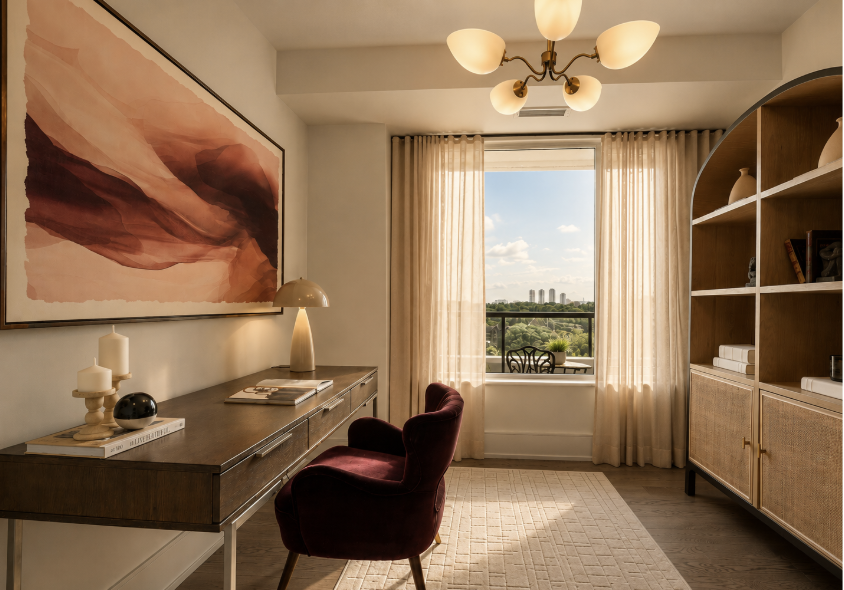
Staging matters more for a Toronto condo than for almost any other kind of home. A condo buyer is often comparing a dozen units with near-identical floorplans, sometimes in the same building, and the one that feels bigger, brighter and easier to live in is the one that gets the showings. Good condo staging does three things: it makes the square footage read larger, it gives every zone of an open plan a clear purpose, and it makes the listing photos stop the scroll. Below is how we approach it at ALT Interiors, what it costs, and the mistakes we see most often.
Why staging matters for Toronto condos right now
The GTA condo market has shifted firmly toward buyers. TRREB reported an average GTA condo apartment price of $634,972 in Q2 2026, down 7.5% from a year earlier, and data from Wahi shows the average condo took about 36 days to sell in Q2 2026, compared with well under two weeks at the 2022 peak. Sales are moving, but buyers have choice and time.
In that kind of market, price and presentation are the two levers a seller actually controls. A condo that photographs well and shows well gives buyers a reason to book the visit, and a reason not to keep scrolling to the next unit on the same floor.
What makes condo staging different
Staging a 650 sq ft one-bedroom is a different job from staging a detached house. Four things change the approach:
- Scale. Standard-size furniture swallows a condo. Every piece has to be chosen for the room, not pulled from a generic package.
- Open plans. Living, dining and kitchen often share one space, so buyers need help seeing where each part of life happens.
- Light and views. Floor-to-ceiling windows and a skyline or lake view are often the unit's biggest selling point, and staging should frame them, not block them.
- Building logistics. Elevators, loading docks and management rules shape how and when staging can be delivered.
Eight staging moves that matter most in a condo
1. Right-size every piece
Apartment-scale sofas, armless chairs, round dining tables and leggy furniture that shows the floor underneath all make a room feel larger. One correctly sized sofa does more than a sectional that fills the room wall to wall.
2. Give the open plan clear zones
A rug anchors the living area, a light fixture or pendant defines the dining spot, and furniture placement creates a natural walkway. When buyers can see a place to relax, a place to eat and a place to work, the unit stops feeling like one undefined room.
3. Show a real dining spot
Many condo listings skip the dining table to save space, and buyers notice. Even a small round table for two or four answers the question every buyer asks: where would we actually eat?
4. Give the den a job
An empty den reads as wasted space. Staged as a home office, a nursery or a guest nook, it becomes a reason to choose this unit over a straight one-bedroom.
5. Frame the windows and the view
Keep furniture low near the windows, use light window treatments or none at all, and arrange seating so it faces the view. In photos, the view is often what makes a buyer click.
6. Use mirrors and light deliberately
A well-placed mirror bounces daylight deeper into the unit, and layered lamps keep interior corners from going dark in photos. Updating a dated builder light fixture is one of the most cost-effective changes in a condo, and it is part of the design guidance we give before staging.
7. Stage the balcony
Two chairs and a small table turn a concrete slab into extra living space in the buyer's mind, especially for spring and summer showings. In colder months, keep it clean and simple so it still photographs as usable space.
8. Edit storage ruthlessly
Condo buyers open every closet. Half-empty closets, a clear front hall and tidy kitchen cabinets all say there is room to live here, which matters in a home where storage is limited.
Vacant, occupied or tenant-occupied?
Vacant condos need the most help. An empty unit makes it hard to judge scale, and buyers consistently underestimate how much furniture fits. Vacant staging furnishes the main living areas, dining space and bedrooms from scratch.
Occupied condos usually need editing more than adding: removing pieces that crowd the space, rearranging what stays, and layering in art, rugs, lighting and accessories.
Tenant-occupied units are common in Toronto investor sales and need a lighter touch, timed around the tenant and focused on decluttering and photography day. Your stager should plan this with your realtor before anything is scheduled.
Building logistics to sort out before staging day
Condo staging lives or dies on logistics. Before booking, confirm with your property management office:
- How to book the service elevator, and how far ahead
- Loading dock access and the permitted move-in and move-out windows
- Whether a certificate of insurance or a deposit is required for deliveries
- Where the delivery truck can park while unloading
- Any rules about protecting elevators and hallways
ALT installs with our own crew and trucks, drawing on a 12,000 sq ft warehouse of owned furniture and decor, so delivery and removal are scheduled by our team rather than a third-party rental company.
What condo staging costs
At ALT, every staging project starts with a flat $350 + tax consultation, credited toward your staging if you proceed. Vacant staging packages start from approximately $4,000 + HST, and occupied staging is quoted per property after the consultation. For vacant condos, we can often prepare a quote remotely from photos, video, a floorplan or an old listing, which helps investors and owners who are not in the city. See our Toronto home staging cost breakdown for what drives the price.
Common condo staging mistakes
- Oversized sectionals or king beds that make rooms look smaller in photos
- Leaving the den empty or using it as storage
- Heavy drapes that hide the windows and the view
- Too many small accessories, which read as clutter in a small space
- Skipping the dining area entirely
- Booking photos before the staging is fully finished
Frequently asked questions
Is staging worth it for a small Toronto condo?
Usually, yes. Condo buyers compare many similar units, and staging is often what makes one listing look bigger and more livable than the next. The cost is typically small next to a price reduction on a unit that sits.
How much does it cost to stage a condo in Toronto?
ALT's consultation is a flat $350 + tax, credited toward staging if you proceed. Vacant staging starts from approximately $4,000 + HST, and occupied staging is quoted per property.
Can you stage a condo without visiting it first?
For vacant units, often yes. With photos, video, a floorplan or an old listing, we can usually prepare a quote remotely, then confirm the final scope after a consultation or photo and video review.
Should I stage a tenant-occupied condo?
It can help, but it needs to be planned around the tenant. In most cases the focus is decluttering, light styling and timing the work around photography day.
What is the most important room to stage in a condo?
The main living and dining space, because it appears in the lead listing photos and is where buyers decide whether the unit feels big enough. The primary bedroom comes next.
Staging your condo with ALT
ALT Interiors has staged homes across the GTA since 2016, from $500K condos to $15M estates, with over $4 billion in property staged. Selling in the city? See how we work across Toronto on our Toronto home staging page, or read how to choose a home stager in Toronto.